Actinidia kolomikta
Siberian kiwiberries
Siberian kiwiberries are hardy down to -30°C. For a female Siberian kiwiberry plant to bear fruit, it needs a male pollinating variety of Siberian kiwiberries (Actinidia kolomikta) nearby.
You can find all the information about growing kiwipflanzen in our guides.
Kollektion: Siberian kiwiberries (Actinidia kolomikta)
Siberian kiwiberries are hardy to -30°C. For a female Siberian kiwiberry plant to bear fruit, it requires a male pollinator variety of Siberian kiwiberries (Actinidia kolomikta) nearby.
You can find all the information you need to grow kiwi plants in our instructions.
-
Siberian Kiwiberry Duo – 2 plants (Act. kolomikta)
Normaler Preis €37,90Normaler PreisStückpreis / pro€39,80Angebotspreis €37,90Sale -
Male Siberian kiwiberry Adam (Actinidia kolomikta)
Normaler Preis €19,90Normaler PreisStückpreis / proAngebotspreis €19,90 -
Siberian kiwi berry Dr. Szymanowski (Actinidia kolomikta)
Normaler Preis €19,90Normaler PreisStückpreis / proAngebotspreis €19,90 -
Siberian kiwiberry Sentyabraskaya (Actinidia kolomikta)
Normaler Preis €19,90Normaler PreisStückpreis / proAngebotspreis €19,90
Actinidia kolomikta
Siberian kiwiberries
Siberian kiwiberries are less well known than their relatives, such as the kiwi and kiwiberry. This special type of kiwi is fascinating not only for its delicious, vitamin-rich fruit but also for its distinctive foliage color, which makes it a real eye-catcher.
for a good start
Location
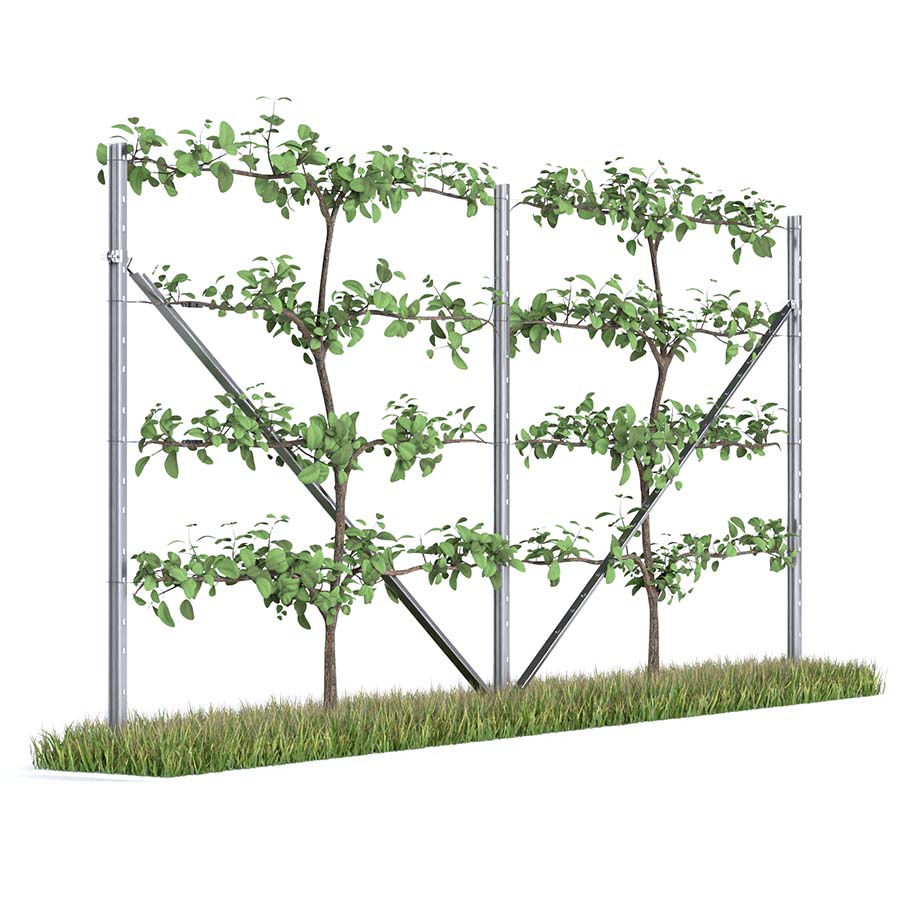
Siberian kiwiberries must be kept outdoors in both summer and winter. They prefer a partially shaded to sunny location. As they are climbing plants, they require a support structure (e.g., trellis, pergola, garden fence).
The soil should be slightly acidic and able to retain water well so that the roots do not dry out.
Winter hardy and robust
Care
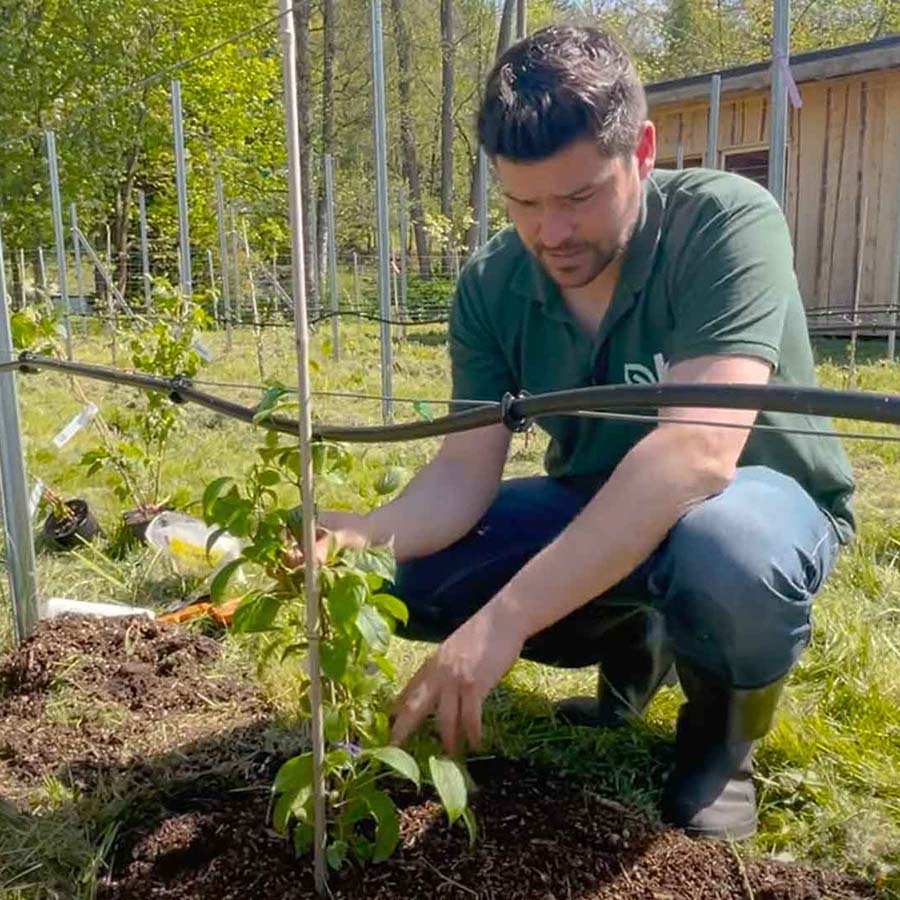
Siberian hardy kiwi berries are extremely robust, easy to care for, and hardy down to -30°C.
They do not require any extraordinary care, just regular watering, pruning if necessary, and fertilizer. Winter protection is not needed.
Bee-friendly
Pollination
For fruit to develop, female flowers must be fertilized by pollen from male flowers. Fortunately, insects, primarily bees, do this for us.
For this, they only need a male Siberian kiwi berry (Actinidia kolomikta) nearby.
Vitamin C Booster
Superfood
Despite their high vitamin C content, Siberian kiwiberries offer a balanced sweet-tart flavor. They are also rich in antioxidants and fiber, making them a great addition to a healthy diet.
Refrigerated, Siberian kiwiberries last for several weeks, and even several months when frozen.
Family tradition
Our Kiwi Nursery
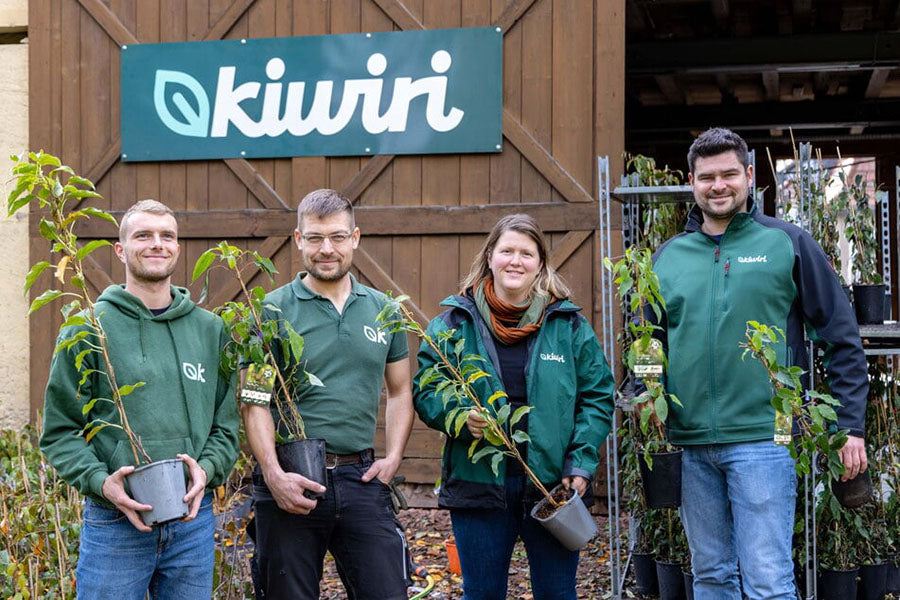
We have been growing kiwifruit plants in our nursery since the 1980s. We support home gardeners and farmers with their cultivation and ship our plants throughout Europe.
Our nursery team is always available to answer any questions you may have about our plants.
Frequently Asked Questions
Are Siberian hardy kiwiberries frost-hardy?
Siberian kiwifruit is hardy down to -30 °C. These extremely robust woody plants originate from the cold regions of Asia. They have also been specially bred and selected for our latitudes.
Tip: If your kiwifruit has already begun to sprout in spring and a late frost is forecast, you can cover it with fleece or place it in a greenhouse for this limited time to protect the fresh shoots from frost.
What is the difference compared to kiwiberries (Actinidia arguta)?
Siberian kiwiberries are somewhat less vigorous and more robust. They are hardy down to -30 °C and are also recommended for mountainous regions or north-facing slopes.
Compared to kiwiberries (Actindia arguta), the disadvantages are the limited variety selection and thus less variation in ripening time, color, and aroma.
When do Siberian hardy kiwis bear fruit for the first time?
Our Siberian hardy kiwifruit plants are at least 2 years old at the time of shipping and usually bear their first fruit in the 2nd to 3rd year after planting.
When is the best time to plant?
Kiwi plants can be planted year-round, provided the ground is not frozen. In spring, we recommend planting after the Ice Saints, when there is no more risk of late frost, and in autumn before the first frost. You can order our plants from us all year round and, if necessary, overwinter them outdoors in a sheltered location until they are planted out (e.g. in an open greenhouse, against a house wall, or under a carport).
Which Siberian kiwi berry variety is the best?
All our available Siberian kiwiberries (Actinidia kolomikta) have been tested over decades, are very hardy and super tasty. They do not differ in taste.
Do I need a male kiwifruit plant?
Siberian kiwifruit is dioecious. Therefore, it requires a male kiwifruit plant (Actinidia kolomikta) for pollination. This can fertilize up to six female kiwifruit plants (Actinidia kolomikta) within a radius of 25 meters.
How much space do kiwi plants need?
As kiwifruit vines are shallow-rooted, we recommend a planting distance of one to two meters. The height and width are determined by the support structure. Kiwifruit vines will not grow beyond this.
How often should you water Siberian hardy kiwi?
The root system of kiwi plants should never dry out completely. In sunny locations, a layer of mulch can help. In midsummer, kiwis need about 2 liters of water per day.
Why isn't my Siberian kiwi berry producing fruit?
Usually, the pollinating variety is missing, or it is a male plant. Our nursery team will help you identify your plants and recommend suitable varieties.
At Kiwiri, you receive a variety guarantee to ensure a successful harvest.
Can kiwiberries be grown in a pot?
Siberian kiwifruit can be grown in pots on balconies and terraces. The pot should have a capacity of at least 40 liters to prevent the soil from freezing solid in winter.
For your kiwi berry garden
-
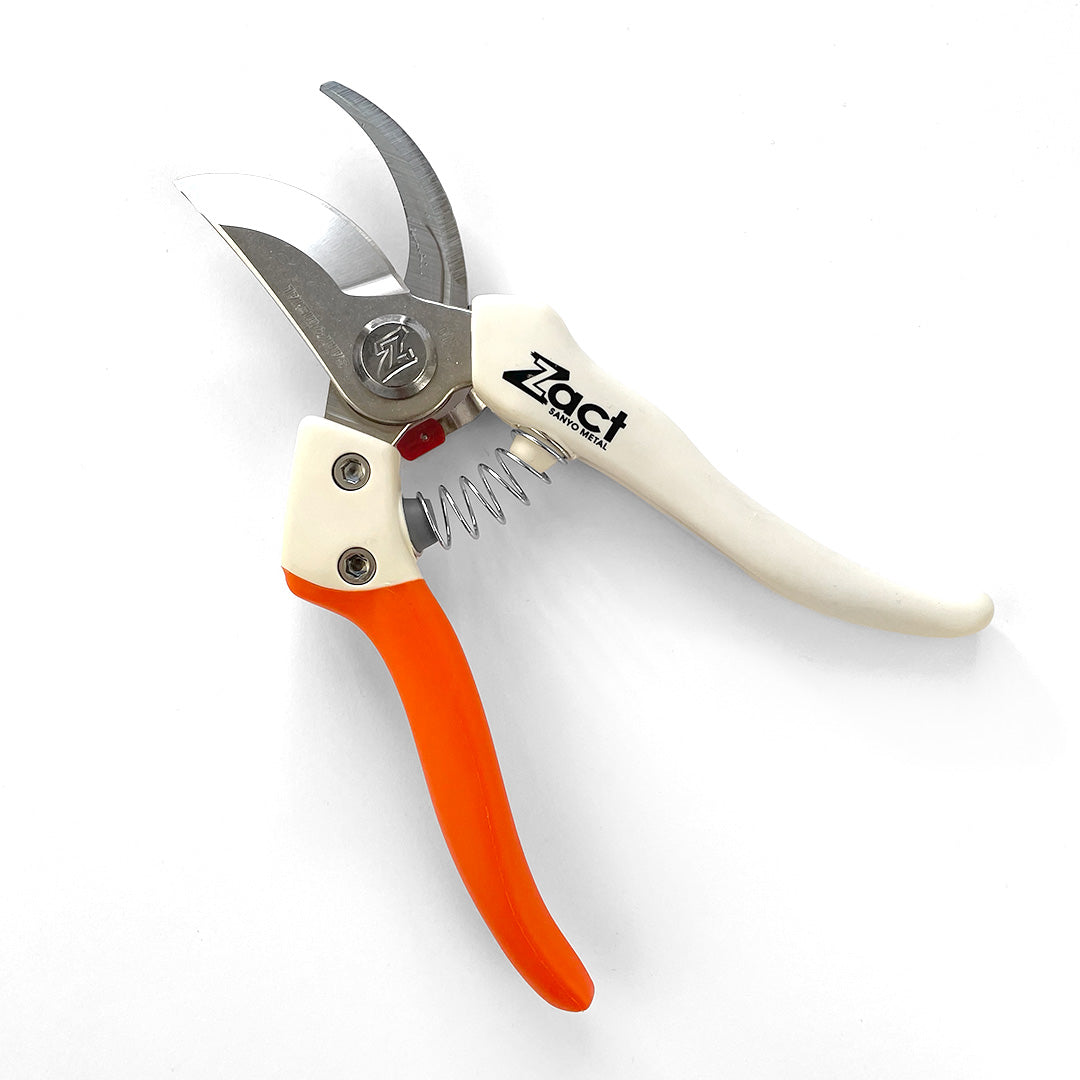
garden tools
Reliable garden tools for your kiwi garden – used daily by our...