Actinidia deliciosa
Kiwis
Green kiwifruit that we know from the supermarket is hardy down to -12°C and is therefore only suitable for particularly mild locations. For a female kiwifruit plant to bear fruit, it needs a male pollinating variety of kiwifruit (Actinidia deliciosa) nearby.
You can find all the information about growing kiwifruit plants in our guides.
Kollektion: Kiwis (Actinidia deliciosa)
Kiwis are hardy to temperatures as low as -12°C and are therefore only suitable for particularly mild locations. For a female kiwi plant to bear fruit, it requires a male kiwi pollinator (Actinidia deliciosa) nearby.
You can find all the information you need to grow kiwi plants in our instructions.
-
Kiwi Duo - 2 kiwi plants (Actinidia deliciosa)
Normaler Preis €37,90Normaler PreisStückpreis / pro€39,80Angebotspreis €37,90Sale -
Male Kiwi Tomuri (Actinidia deliciosa)
Normaler Preis €19,90Normaler PreisStückpreis / proAngebotspreis €19,90 -
Kiwi Jenny (Actinidia deliciosa)
Normaler Preis €19,90Normaler PreisStückpreis / proAngebotspreis €19,90 -
Kiwi Hayward (Actinidia deliciosa)
Normaler Preis €19,90Normaler PreisStückpreis / proAngebotspreis €19,90 -
Kiwi Kivite (Actinidia deliciosa)
Normaler Preis €19,90Normaler PreisStückpreis / proAngebotspreis €19,90
Actinidia deliciosa
Kiwis
Thanks to its exotic flavor and healthy properties, this tropical fruit has made its way into gardens and supermarkets around the world. The kiwi plant originally comes from China.
However, due to the unique climatic conditions, New Zealand and South Tyrol have become major centers for its cultivation.
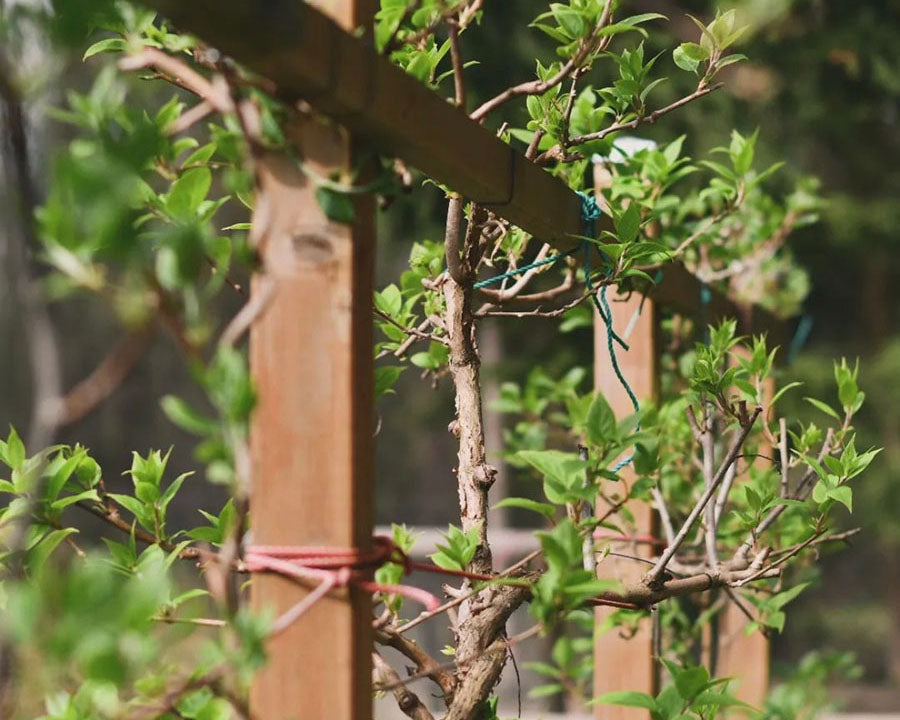
for a successful cultivation
Location
Growing tropical kiwifruit is possible in selected regions of Germany.
Wine-growing areas are particularly suitable, provided there are no late frosts in spring and temperatures do not fall below -12°C.
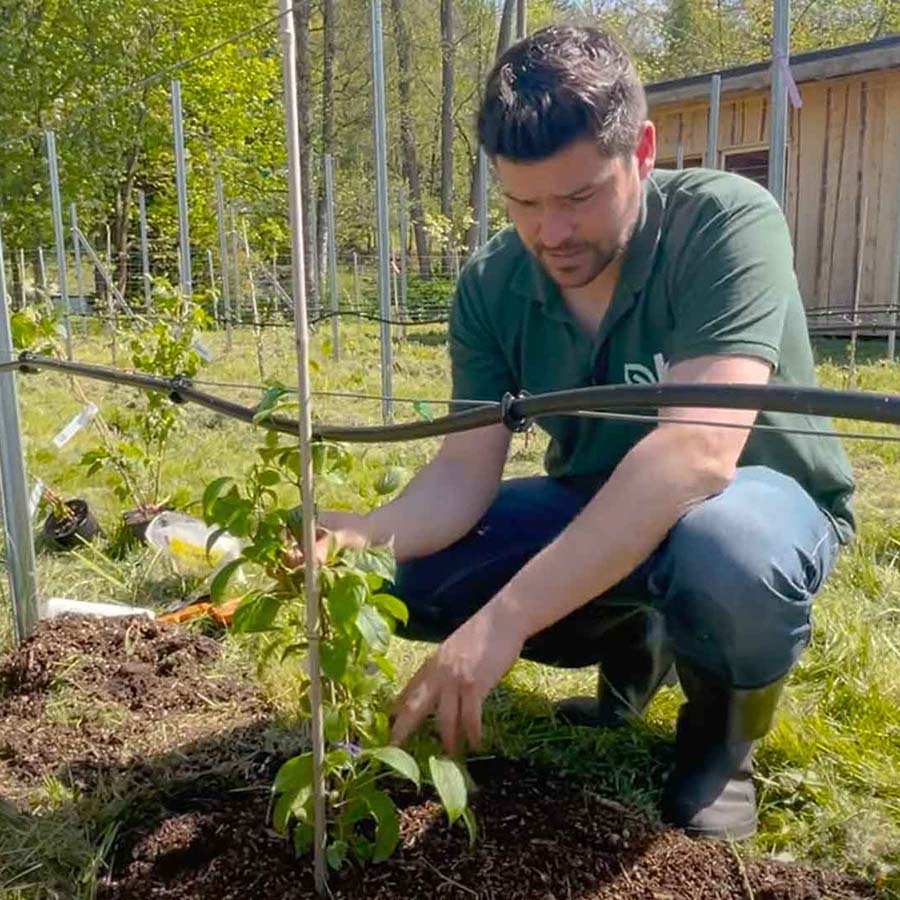
Winter hardy and robust
Care
Kiwi plants are extremely disease-resistant and tolerate pruning well. They only require regular watering and fertilizer in nutrient-poor soils.
Kiwis can be pruned twice a year to promote flowering and thus increase yield.
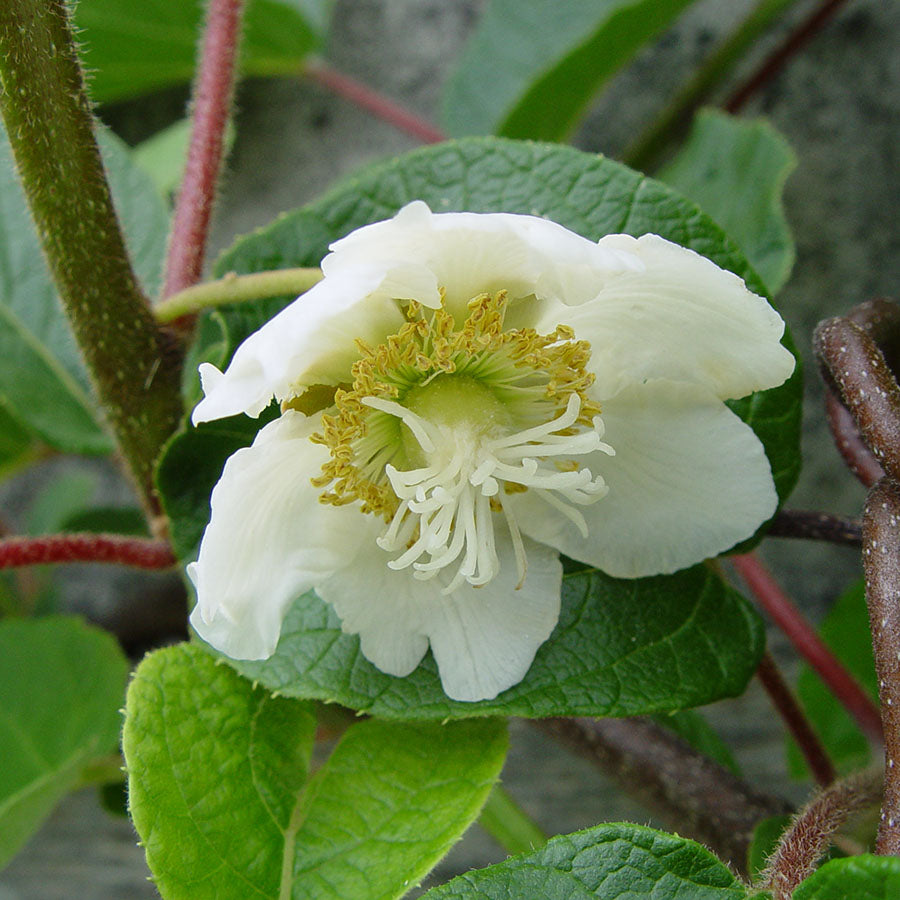
Bee-friendly
Pollination
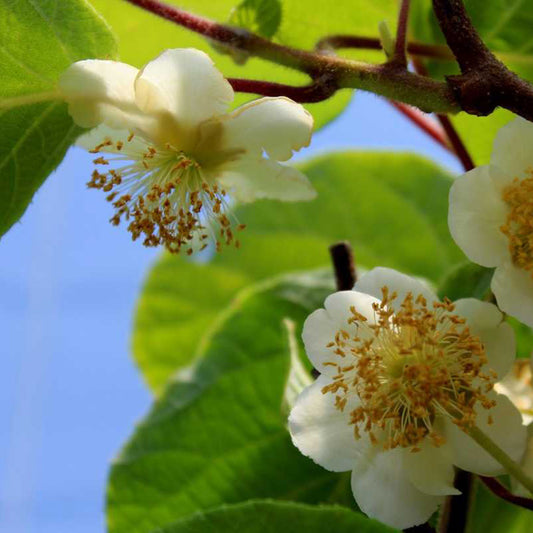
For fruit to develop, female flowers must be fertilized by pollen from male flowers. Fortunately, insects, primarily bees, do this for us.
For this, they only need a male kiwifruit plant (Actinidia deliciosa) nearby.
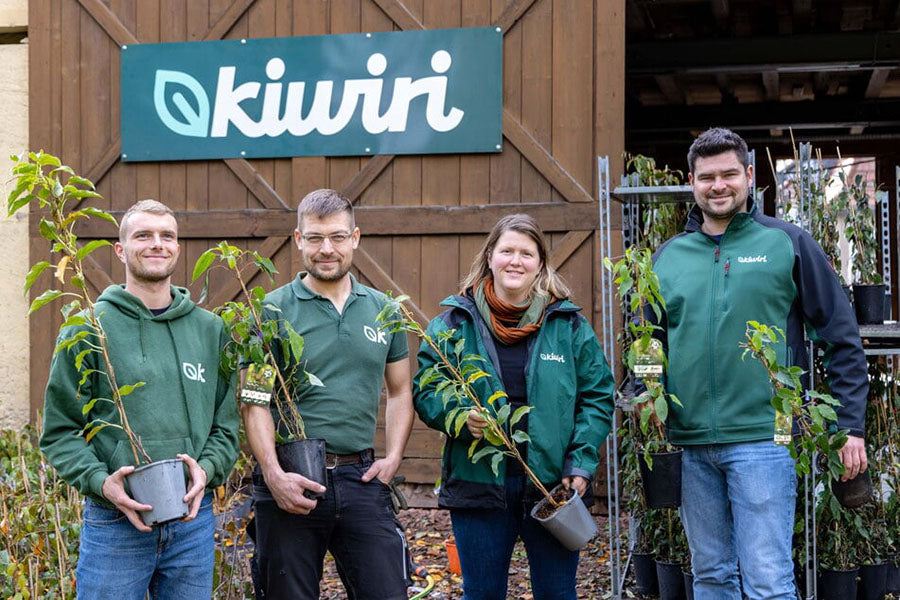
Family tradition
Our Kiwi Nursery
We have been growing kiwifruit plants in our kiwifruit nursery for over 40 years. We support home gardeners and farmers with their cultivation and ship our plants throughout Europe.
Our nursery team is always available to answer any questions you may have about our plants.
Frequently Asked Questions
Are kiwifruits hardy in winter?
Kiwis are hardy down to -12 degrees Celsius and are therefore only suitable for particularly mild regions of Germany and sheltered sites. For cultivation in Germany and Europe, we recommend growing hardy kiwiberries (Actinidia arguta).
When do kiwis start bearing fruit?
Our kiwifruit plants are at least 2 years old when shipped and usually bear their first fruit in the 4th to 6th year after planting.
When is the best time to plant?
Kiwi plants can be planted year-round as long as the ground is not frozen. In spring, we recommend planting after the Ice Saints, when there is no more late frost, and in autumn before the first frost. You can order kiwis from us all year round and, if necessary, overwinter them in a sheltered outdoor location until they are planted out (e.g., an open greenhouse, against a house wall, or under a carport).
Can you grow kiwis in a pot?
Kiwis can also be grown in pots on balconies and terraces. The pot should have a capacity of at least 40 liters to prevent the soil from freezing solid in winter.
Which type of kiwi is the best?
All our available kiwifruits (Act. deliciosa) have been tested over decades, are very robust, and are super delicious. Their flavors differ only in nuances.
Do I need a male kiwi?
Kiwis are dioecious. Therefore, they require a male kiwi (Actinidia deliciosa) for pollination. This can fertilize up to six female kiwis (Actinidia deliciosa) within a radius of 25 meters.
Parthenocarpic varieties, such as the Kiwi Jenny, can produce some small fruit without pollination, but are purely female and do not produce pollen.
How much space do kiwifruit plants need?
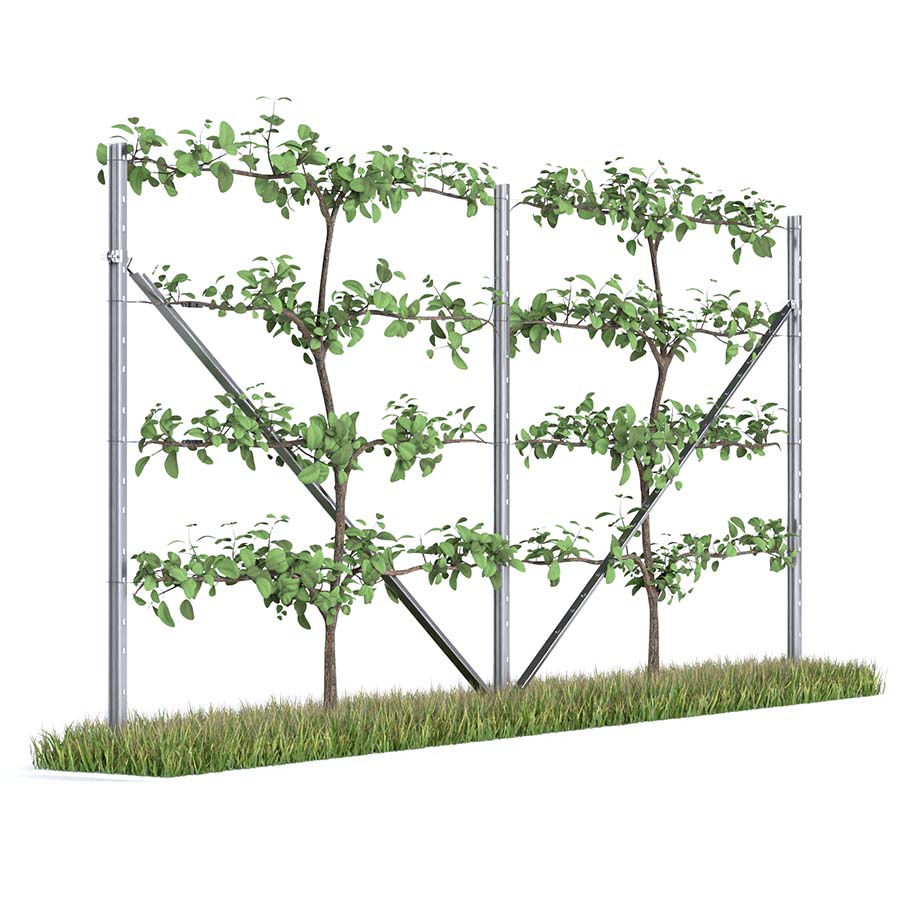
As kiwifruit plants are shallow-rooted, we recommend a planting distance of one to two metres. The height and width are determined by the support structure. Kiwifruit plants will not grow beyond this.
How often should you water kiwis?
The root system of kiwi plants should never dry out completely. In sunny locations, a layer of mulch can help. In midsummer, kiwis need about 2 liters of water per day.
Why isn't my kiwi plant bearing fruit?
Usually, a pollinator variety is missing, or the plants are male. Our nursery team will help you identify your plants and recommend suitable varieties.
At Kiwiri, you receive a variety guarantee to ensure a successful harvest.
For your kiwi garden
-
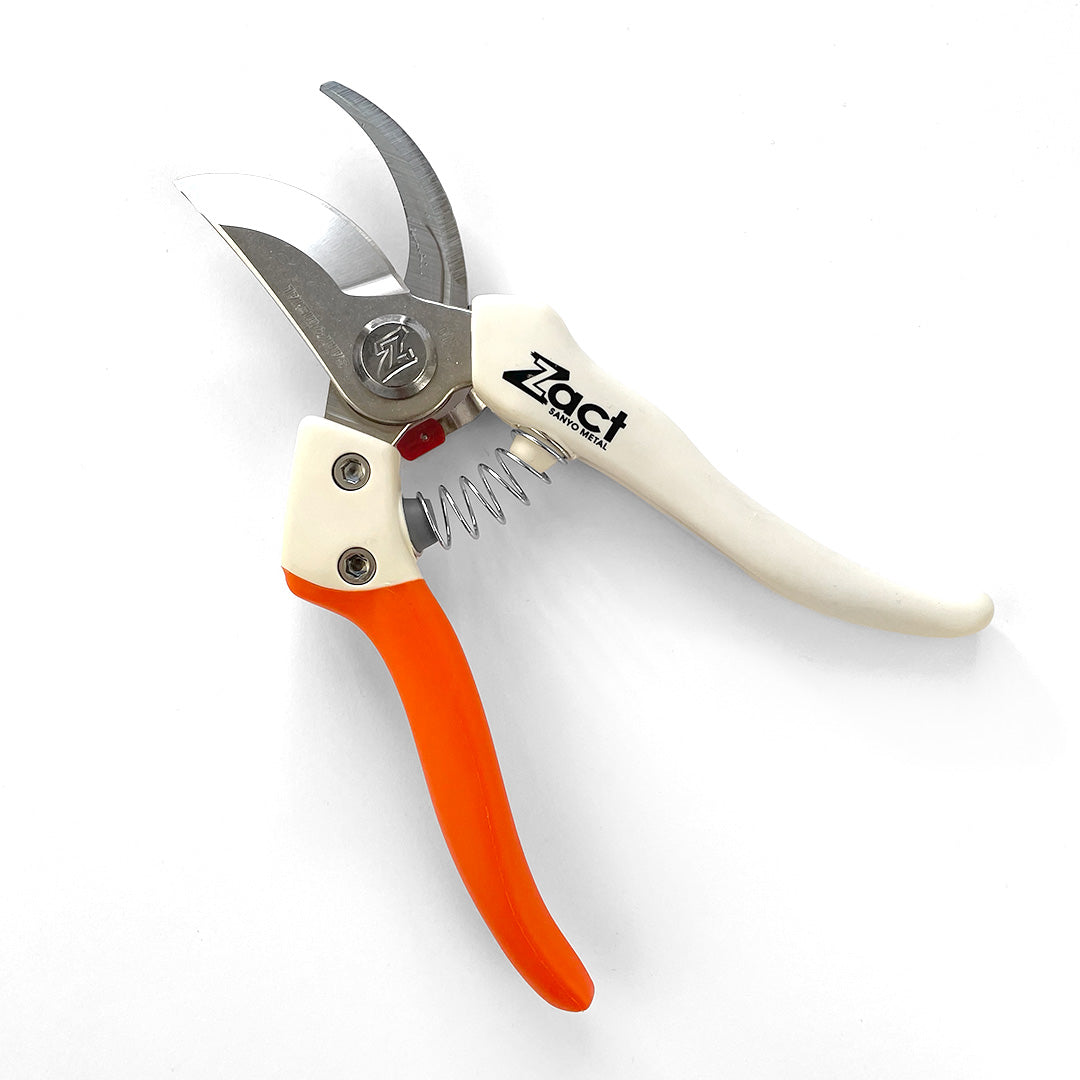
garden tools
Reliable garden tools for your kiwi garden – used daily by our...